Focus & Productivity · 3 min read
Pomodoro, Deep Work or Sprint: Which Focus Method Fits Your Work?
Focus methods are useful when they match the task.
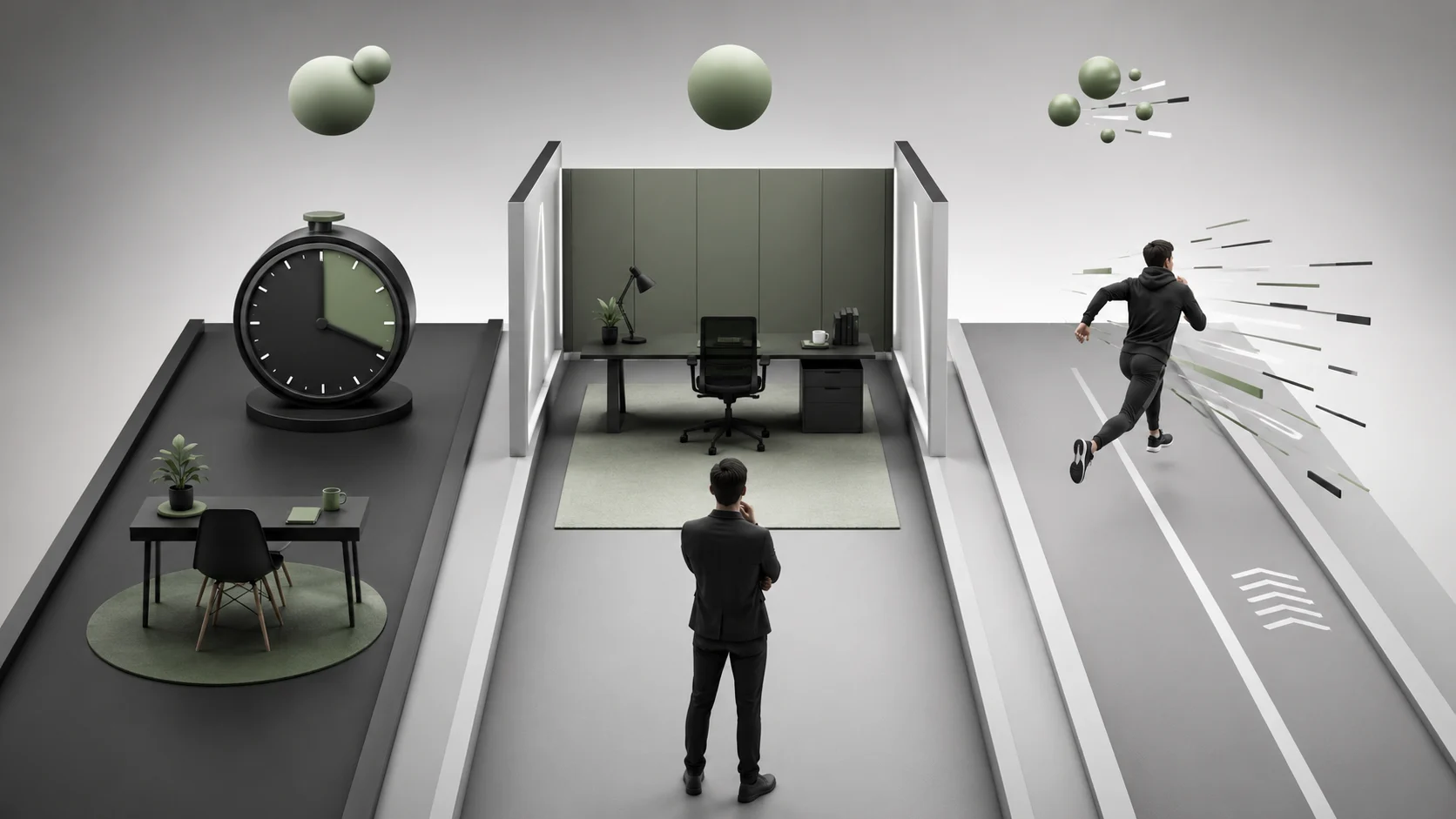
Focus methods are useful when they match the task. Problems begin when a person treats one technique as a universal productivity law. A twenty-five-minute Pomodoro may be ideal for starting an avoided task but disruptive during complex analysis. A two-hour deep-work block may be powerful for writing but unrealistic in a meeting-heavy role. A short sprint can create urgency but become exhausting if used all day.
Pomodoro uses a fixed work interval followed by a short break, commonly twenty-five and five minutes. It works well for tasks with high starting resistance, study, repetitive administration, inbox processing, and work that can be divided into small units. The timer creates a limited commitment: you do not need to finish everything, only stay with the task until the interval ends. The weakness is interruption. If concentration takes fifteen minutes to build, stopping at twenty-five may reduce momentum.
Deep work uses longer periods of uninterrupted concentration on cognitively demanding output. It fits strategy, writing, analysis, coding, research, design, and complex problem solving. A deep-work block should have a clear output, protected calendar, prepared materials, and communication boundary. The method fails when the block is vague or when the role requires immediate responsiveness throughout the day.
A sprint is a shorter, high-intensity session with a visible finish line. It may last ten to forty-five minutes. Sprints work well for urgent preparation, first drafts, decision memos, presentation edits, or clearing a defined task list. The method uses urgency deliberately. However, repeated urgency can increase stress and reduce quality, so sprints should not become the default operating model for an entire team.
Choose the method using four variables. First is task complexity. More complex work usually needs longer continuity. Second is emotional resistance. High-resistance tasks benefit from shorter commitments. Third is interruption risk. If the environment cannot protect a long block, use shorter sessions around communication windows. Fourth is energy. Stronger energy supports longer focus; lower energy may require shorter intervals and simpler tasks.
A practical hybrid day could use one sixty- to ninety-minute deep-work block in the morning, two Pomodoro cycles for administrative work, and a fifteen-minute sprint before a meeting. The methods are not competitors. They are different operating modes.
Breaks should be intentional. Stand, stretch, drink water, rest the eyes, or walk briefly. Opening social media may replace one form of cognitive load with another. Research on micro-breaks indicates that short breaks can improve well-being and may help performance depending on the task and break design.
Measure output rather than timer completion. Finishing six Pomodoros is not valuable if the task was poorly chosen. Track the intended deliverable, quality, interruptions, and energy after the session. After one week, identify which method works best for different categories of work.
For example, an HR professional might use deep work to design a performance framework, Pomodoro to screen CVs, and a sprint to prepare interview questions. A student might use Pomodoro for revision, deep work for a research paper, and a sprint for practice questions.
FocusForge includes Pomodoro, deep-work, and sprint modes, along with custom work and break durations. Use it as an experiment platform: select the method, record distractions, and adjust based on actual output rather than productivity trends.
Choose a focus method based on task shape. Pomodoro works well for starting, revision, administrative work, or tasks that benefit from visible boundaries. Longer deep-work blocks fit analysis, writing, coding, and design when setup time is significant. Short sprints suit collaborative environments where urgent requests are common. Test each method for several sessions under similar conditions and record output quality, completion, fatigue, and restart difficulty. Do not judge a method only by how intense it feels. The best system produces repeatable progress without creating avoidable exhaustion. It is also acceptable to combine methods: a short sprint can clear administrative noise before a longer concentration block. Protect the transition between blocks with a written next step so returning to the task requires less mental reconstruction.
 Back to Insights